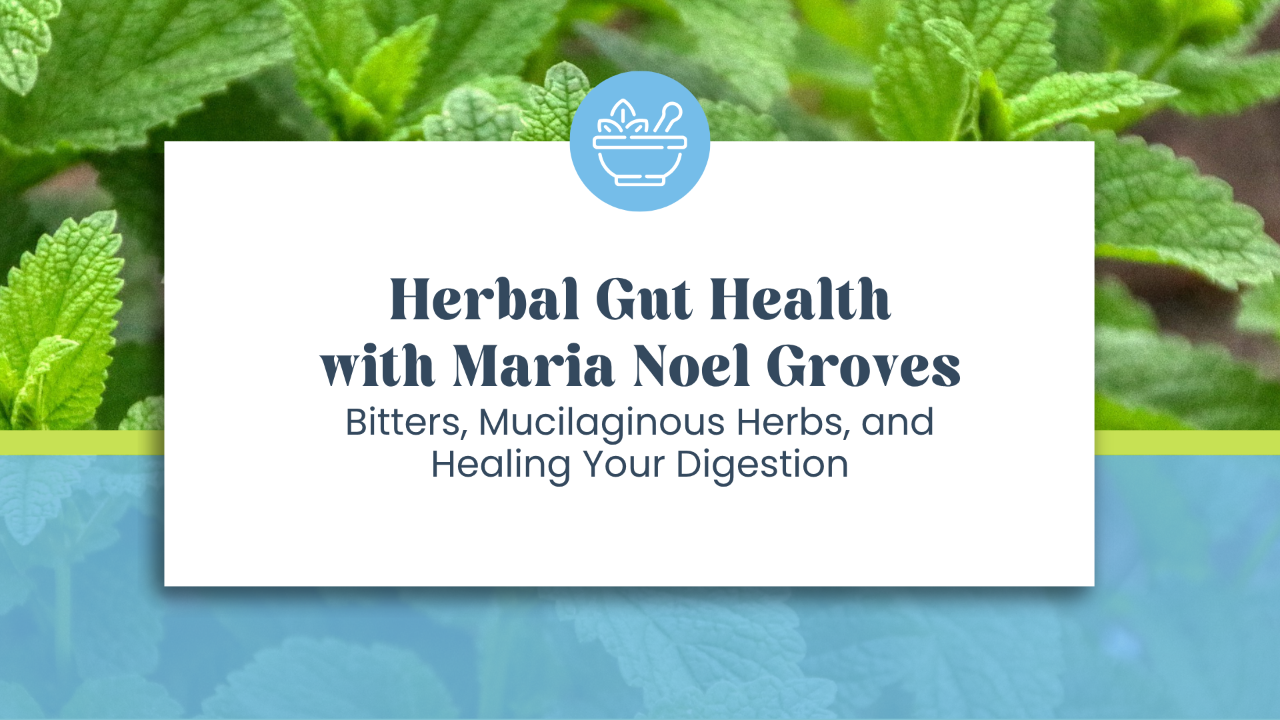
Herbal Gut Health with Maria Noel Groves: Heal Your Digestive System
Your gut has been trying to tell you something. The question is whether you know how to listen.
In this episode of The Herbalist's Path, I sit down with Maria Noel Groves, AHG registered herbalist, and author of several books including her newest, Herbal Gut Health. We go deep on what is actually happening in the digestive system, which herbs support it, when to reach for plants, and when to call the doctor.
This one is rich. Bitters, mucilaginous herbs, lemon balm, the anatomy of the full digestive tract, how to read your body's signals, and so much more. Maria makes all of it so easy to understand without ever dumbing it down.
Lemon Balm: Where the Nervous System Meets the Gut
Most people think of lemon balm as a nervine, and it absolutely is. It calms without sedating, which means people can use it during the day without feeling foggy. But what often gets overlooked is its role in digestion.
Lemon balm is a mild bitter and a gentle carminative. That means it can support digestive function, ease cramping, and help with that nervous stomach that flares when life gets stressful. And as Maria points out, the nervous system and the digestive system are far more connected than most people realize. When one is struggling, the other usually is too.
A few things worth knowing about lemon balm quality:
- Fresh or homegrown lemon balm is significantly more potent than most commercial products
- For tinctures, use high-proof alcohol and pack the jar as full as you can get it
- Refresh your dried lemon balm every 6 months to one year, as the aromatics lose their potency faster than most other plants
- For drying, start with good airflow and finish in a dehydrator or, as Maria learned from the legendary Michael Moore, in your car on a warm day
Why Bitter Herbs Matter More Than You Think
Bitters are one of the most important and most underused categories in modern herbal practice. When we consume bitter flavors, the whole digestive system wakes up. Salivation increases, digestive juices flow, bile is stimulated, and peristalsis kicks in. Blood sugar regulation improves. Appetite regulates. Traditionally, bitters were part of everyday diet. Sadly, we’ve essentially removed them from modern eating, and our bodies are paying the price.
Good bitters to start with:
- Dandelion root and leaf (Taraxacum officinale)
- Artichoke leaf (Cynara scolymus)one of the stronger options and very sustainable to grow
- Citrus peel (Citrus x aurantium L.) from organic fruit only
- Cacao
It’s important to note, bitters are not right for everyone. If you have significant gut lining damage or inflammation, they can make things worse before they make them better. Listen to your body. If bitters are aggravating, start with soothing and healing herbs first. Remember to take your bitters with food or just before a meal.
When the Gut Needs Healing First
Sometimes the digestive system does not need stimulation. It needs to be coated, calmed, and given a chance to repair. That is where mucilaginous herbs come in.
Maria's favorites for gut healing:
- Marshmallow root (Althaea officinalis): One of Maria's absolute favorites. Sustainable, effective, and works beautifully in water-based preparations. The root has a mild oat-like flavor and is deeply soothing to irritated tissue throughout the digestive tract. If dysbiosis is a concern, try the leaf instead, as it tends to be better tolerated.
- Linden leaf (Tilia spp.): A gentle nervine that also has mucilaginous properties and a lovely honey-cherry-like flavor. Maria has fallen in love with this one in recent years and uses it regularly in tea blends.
- Meadowsweet (Filipendula ulmaria): Wonderful for reducing gut inflammation. A classic ally for reflux and digestive discomfort.
- Plantain leaf (Plantago spp.): Mildly mucilaginous and a solid addition to gut healing tea blends. Does not tend to aggravate dysbiosis.
- Calendula (Calendula officinalis): One of my favorites for its vulnerary, wound-healing properties in the gut.
Tea is almost always the best delivery method for these herbs. Mucilaginous plants extract far better in water than in alcohol, and sipping a big pot throughout the day means the plant is in direct contact with the digestive tract from the mouth all the way down.
When to Reach for Herbs and When to Call the Doctor
A lot of everyday digestive complaints are absolutely appropriate for self-care with plant medicine. But part of thinking like an herbalist is knowing when something is beyond your scope of practice, or medical intervention is necessary. Maria covers this beautifully in the episode and in her book, Herbal Gut Health.
Get checked out if you are experiencing:
- Sudden inability to have a bowel movement, especially with vomiting or intense pain
- Unexplained weight loss or malnutrition despite eating well
- Persistent or worsening reflux
- Blood in the stool
- A dramatic or unexplained shift in bowel habits
Herbs and conventional medicine can absolutely work together, and perhaps they should more. A wise being understands this, and knows when to use one or the other.
Ready to Go Deeper?
Grab Maria's book Herbal Gut Health. I had the pleasure of reading it before it was published, and it's a brilliant work of art and science. It’s practical, beautifully written, and the kind of reference you will reach for again and again.
And if you’re ready to learn how to think like an herbalist and build real skills with plants, that is exactly the kind of work we do inside the Community Herbalist Certification and Mentorship Program, where Maria is one of our many guest teachers. We’d love to have you join us!
Connect with Maria Noel Groves

Find Maria at Wintergreen Botanicals where you can explore her books, online classes, and consultations. Sign up for her monthly newsletter packed with seasonal recipes and herbal insights. You can also find her on Instagram here and Facebook here.
Resources Mentioned:
- wintergreenbotanicals.com
- Herbal Gut Health by Maria Noel Groves
Do You Have The Right Remedies On Hand?
Whether it’s a tummy ache, sleepless nights, or boosting immunity, The Ultimate Guide to Stocking Your Natural Medicine Cabinet has the top-quality remedies you need. Tested by a clinical herbalist—and her kid too!
Grab your guide below👇🏼
We hate SPAM. We will never sell your information, for any reason.
Hi, I'm Mel