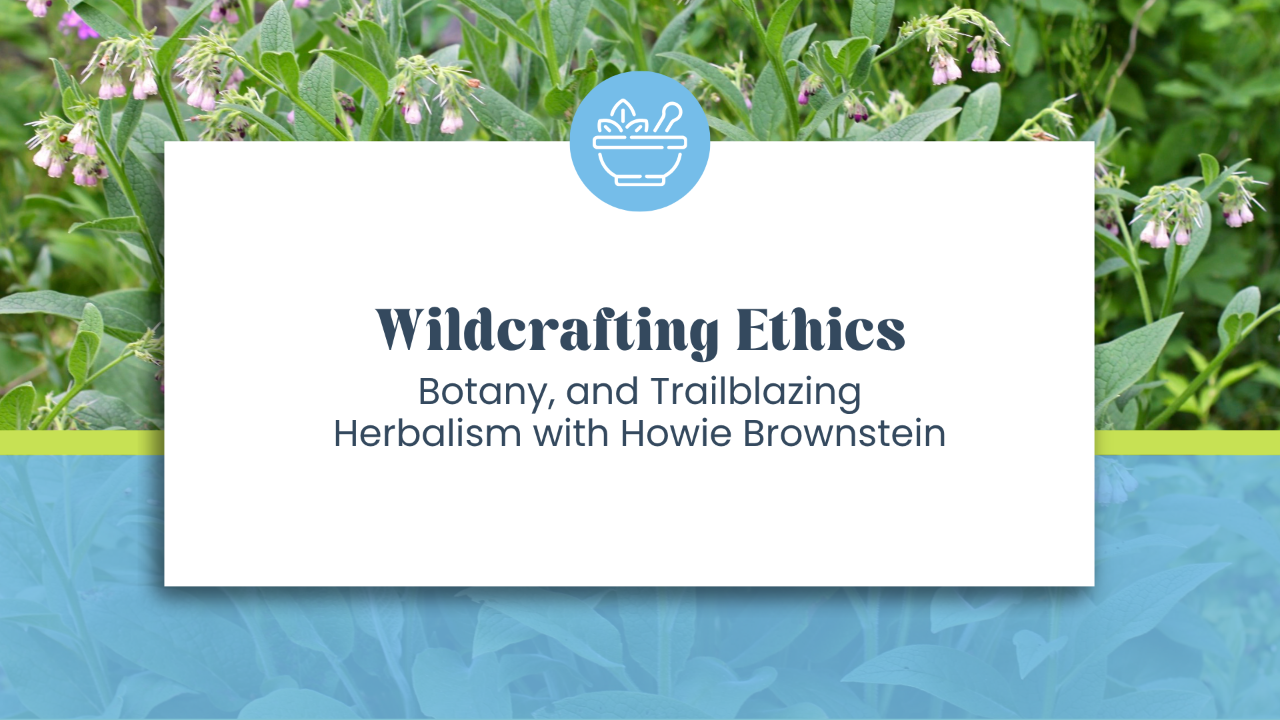
Wildcrafting Ethics and Botany with Howie Brounstein
Wildcrafting has become trendy, and that's not really a good thing.
Big baskets of mystery plants showing up on social media. People harvesting things they can't identify, then asking what to do with it. Misinformation gets repeated until it lands on a reputable site and suddenly becomes fact. It's a lot, and it's worth taking a moment to talk about it with someone who has been doing this work for a very long time.
That's exactly what I got to do in this episode with Howie Brounstein, founder of Columbine School of Botanical Studies. Yes, that’s Columbine School of BS!
Howie has been teaching herbalism and botany for over 40 years, and he’s as funny as the title of the school.
In this conversation we’re covering a lot of ground. Wildcrafting ethics, why botany matters, how to evaluate herb books, and what it was actually like trying to build a career in herbalism back when nobody believed it was a real path.
The Wildcrafting Trend That Worries Howie
Howie has never been a fan of casual wildcrafting, and he was honest about that right from the start. The first time he saw an "I'd rather be wildcrafting" bumper sticker, he cringed. His concern isn't about wildcrafting itself, it's about how often it happens without the skill to back it up.
His apprenticeship runs for three years specifically because identification and use are not things you can rush. Positive plant identification has to be one hundred percent before anything gets harvested or used. If you're unsure, the plant gets brought to a native plant society or local herbarium for confirmation, not jammed into a cute basket, and then posted on social media for advice on what to do with it.
Howie’s not exaggerating about the stakes here. Mushroom poisonings and hemlock poisonings happen every single year, often without much media coverage. People die from misidentification. That's the reality underneath all the pretty and cutesie foraging content online.
Why Botany Matters For Plant Identification Skills
One of the most freeing parts of this conversation is Howie's take on botany itself. You don't need to be a botanist to be a skilled herbalist. If your work is mostly community-based or clinical, using herbs that come from a trusted supplier, botany is something you could get away without. But if you want to wildcraft your own plants, it's essential.
Howie teaches botany using taxonomic keys, the dense identification books most students would rather skip in favor of pointing a phone camera at a plant. He's not against technology long term. Genetic testing devices are getting cheaper and will eventually be reliable enough for identification. But right now, using an app for anything life-or-death is big time risky, and the skill of using a key is becoming as rare as using a sextant to navigate by the stars.
It’s not just the danger that matters here.
It’s the relationship with plants. Watching a plant through an entire season, from the moment it pushes through the snowmelt to the moment it dies back, helps you connect with that plant in a much deeper way. Howie talks about students who, in moments of real crisis, go to the woods instead of reaching for their phones. I do the same.
How to Evaluate Herb Books (And Why Most People Get This Wrong)
If you've ever wondered what herb books are worth your time, Howie's answer is simple. Look for verifiable people. Look for humans, not AI-generated content. And look for authors who are writing from real, lived experience with the plants, not just compiling information from other books like a term paper.
He also pointed out that a lot of early herbalist booklets were written by people still early in their journey, the herbal equivalent of an old photo with bell-bottoms. That's not necessarily a problem, but it's worth knowing the difference between a beginner's pamphlet and decades of clinical experience.
Another thing to consider on your herb learning journey is that different herbal traditions don't translate directly into one another. A book on Ayurvedic herbalism doesn't map cleanly onto Western herbalism, and a book on traditional Chinese medicine is its own complete model. Know which tradition you're studying before you start mixing frameworks.
Taste Every Herb You Give to Someone Else
This is one of Howie's core teaching philosophies, and it's a good one. If you haven't tasted an herb yourself, how can you really know what you're handing someone else? He compares it to the idea that doctors should understand the medications they prescribe.
There's also something to be said for the body's built-in warning system. Howie has had students who get creeped out by a plant like St. John's wort before they even take it. If your body is saying no that strongly, listen to your body. It’s far more wise than whatever random person on social media, that told you you have to have that herb.
Trailblazing Before Herbalism Was a Career
When Howie started in the late 1970s and early 1980s, there was no herbal tea on regular grocery store shelves. Tinctures and wildcrafting had to be explained from scratch in advertising because nobody knew what those words meant. There were a handful of herbal books total, and a handful of companies, Herb Pharm among them, getting started around the same time Howie did.
There was no financial path in herbalism back then. People did it because the calling was stronger than the need for security, not because there was a viable career waiting on the other side. This is a part of why Howie has such a clear-eyed view of what wildcrafting and herbal practice actually require, because he watched the field build itself from almost nothing.
The Heart of Responsible Herbalism
This conversation is a good reminder that herbalism is broad enough to hold a lot of different paths. But, when it comes to wildcrafting it’s wise to use caution, and build your wisdom and experience over time. Get to know the plant before you touch it. Get to know the source before you trust it. And if you're going to give an herb to someone else, know it well enough that you'd take it yourself first.
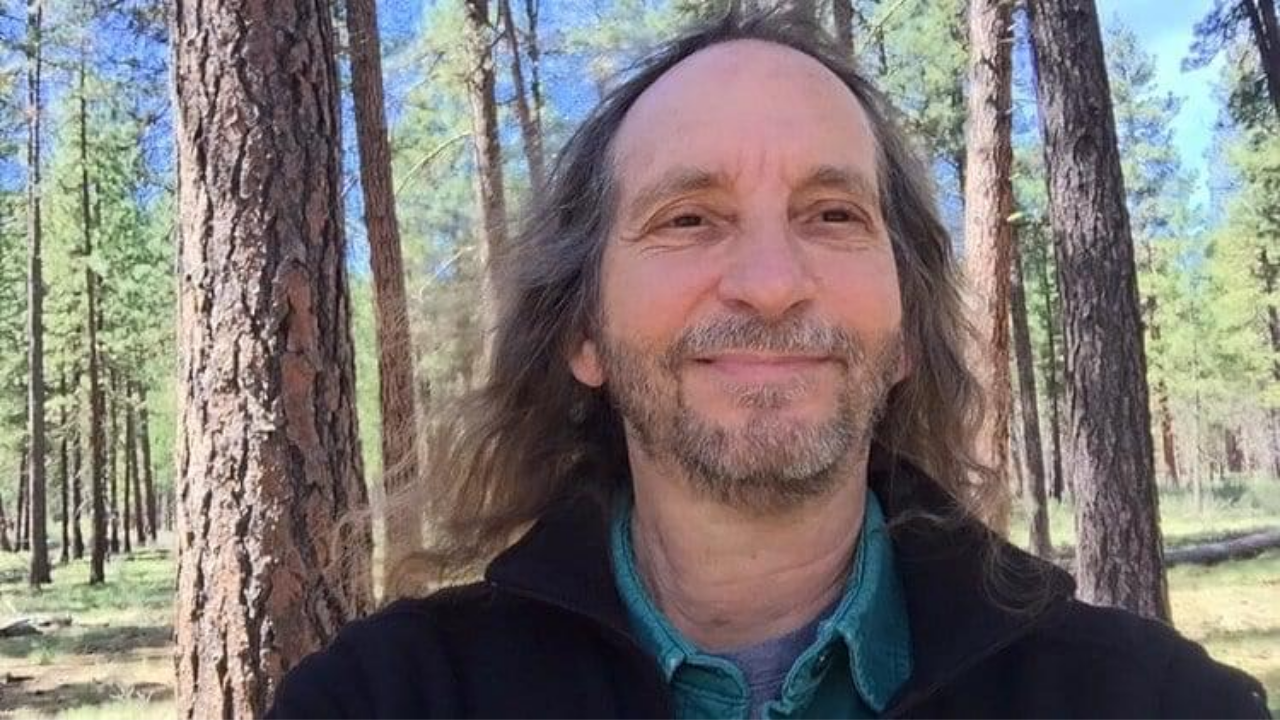
Connect with Howie Brounstein
Learn more about Howie's three-year field apprenticeship, his herbal concepts lectures, and his seasonal classes at botanicalstudies.net. You can also find Columbine School of Botanical Studies on Facebook and Instagram at columbineschoolofbs, connect with Howie directly on LinkedIn, or catch his videos on YouTube. New class announcements typically go out about a month or six weeks before each one begins.
Do You Have The Right Remedies On Hand?
Whether it’s a tummy ache, sleepless nights, or boosting immunity, The Ultimate Guide to Stocking Your Natural Medicine Cabinet has the top-quality remedies you need. Tested by a clinical herbalist—and her kid too!
Grab your guide below👇🏼
We hate SPAM. We will never sell your information, for any reason.
Hi, I'm Mel